Home fermenter
Fermenting at home, one jar at a time
I’m Orysia. I film and write about sauerkraut, pickles, kvass and beet ferments from my kitchen in Lviv. Shop my recipe booklets and guides, or learn the method in a video course.
From $4
One jar, in five steps
Every jar I make goes through the same five steps. Pick a step to see what it does, what usually goes wrong and where to learn it.
01 / Salt
Salt
What it does
Salt is two per cent of the weight of the vegetable. I weigh the cabbage and the salt on the scales, every time.
The one thing that goes wrong
You salt by the handful, and the batch comes out too sharp or goes soft.
- Video

Salting by weight, not by hand
Salt and Brine Chart
$4
Buy nowSalt by weight
11 min
02 / Pack
Pack
What it does
Shred the vegetable, work in the salt until it gives up its juice, then press it into the jar with no gaps.
The one thing that goes wrong
Air pockets stay in the jar, and the top layer spoils.
- Video
Sauerkraut in one big jar
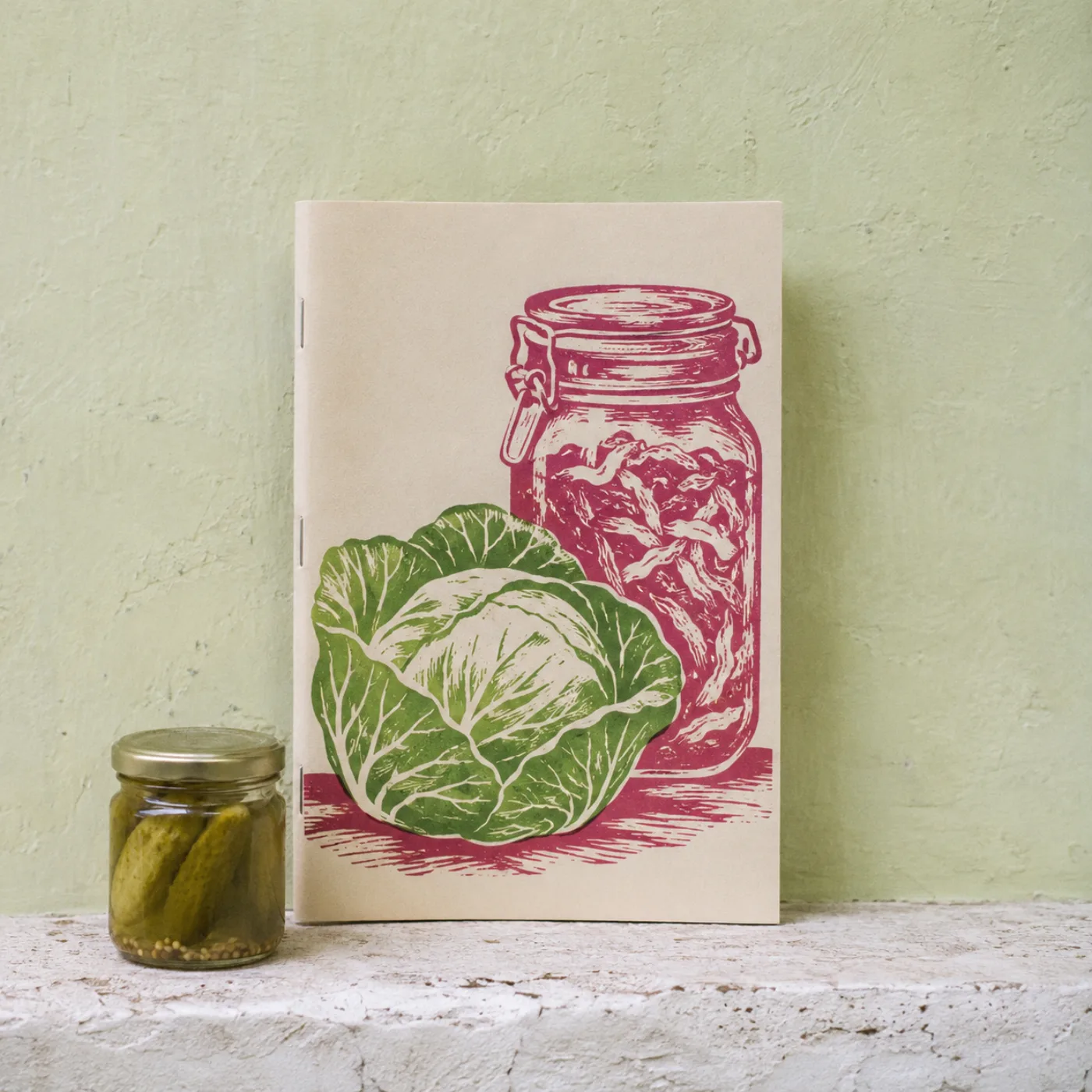
Sauerkraut and Pickles Booklet
$9
Buy nowPack the jar
14 min
03 / Cover
Cover
What it does
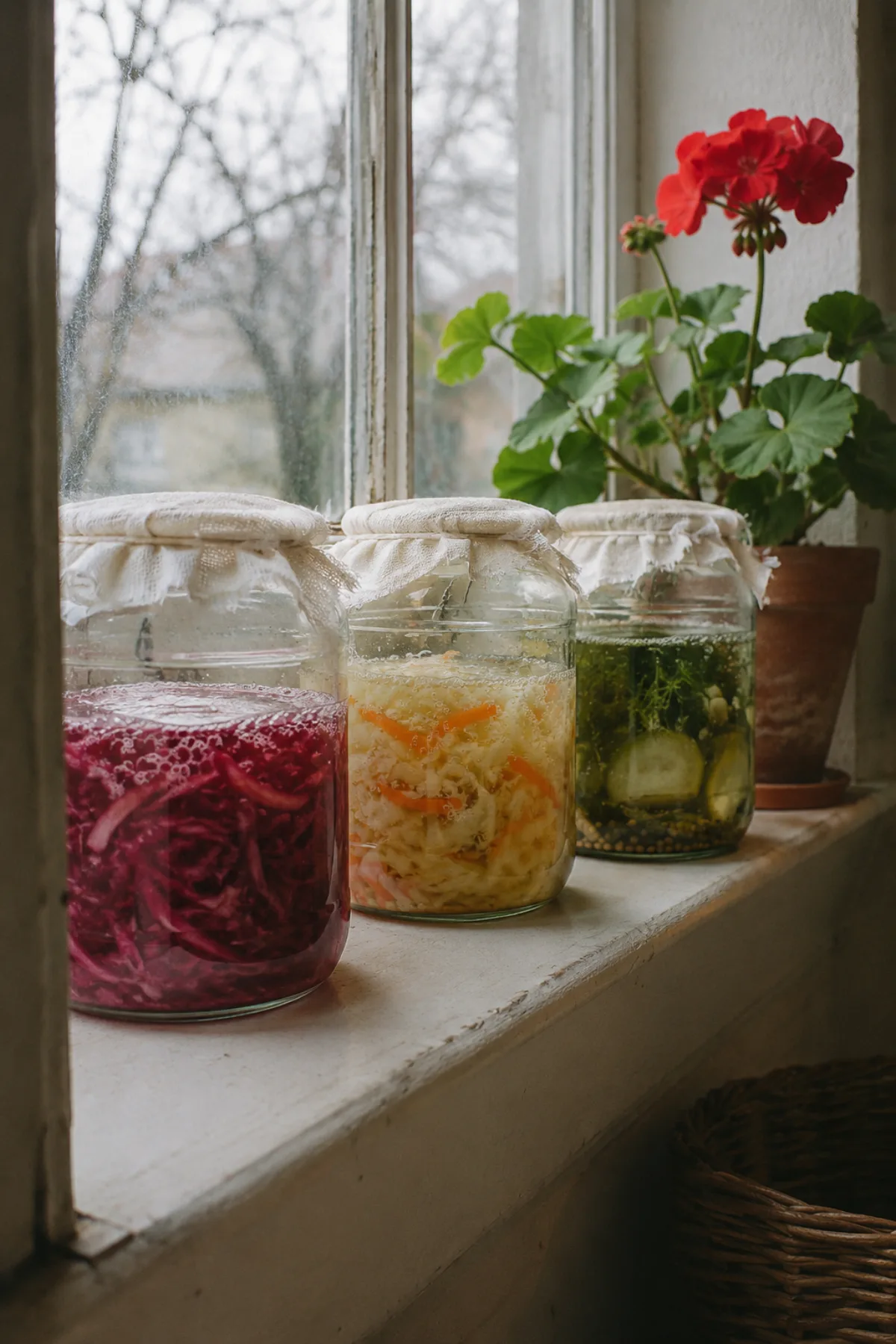
Everything stays under the brine, held down with a glass weight and covered with a cloth, not a tight lid.
The one thing that goes wrong
A leaf floats up into the air and grows mould.
- Video
Weights and cloth lids
Fermenting Jar Log
$5
Buy nowKeep it under the brine
10 min
04 / Wait
Wait
What it does
A few days at room temperature while the bubbles come, then taste every day until it is sour enough for you.
The one thing that goes wrong
You open the jar every hour, or you ignore it for a month.
- Video
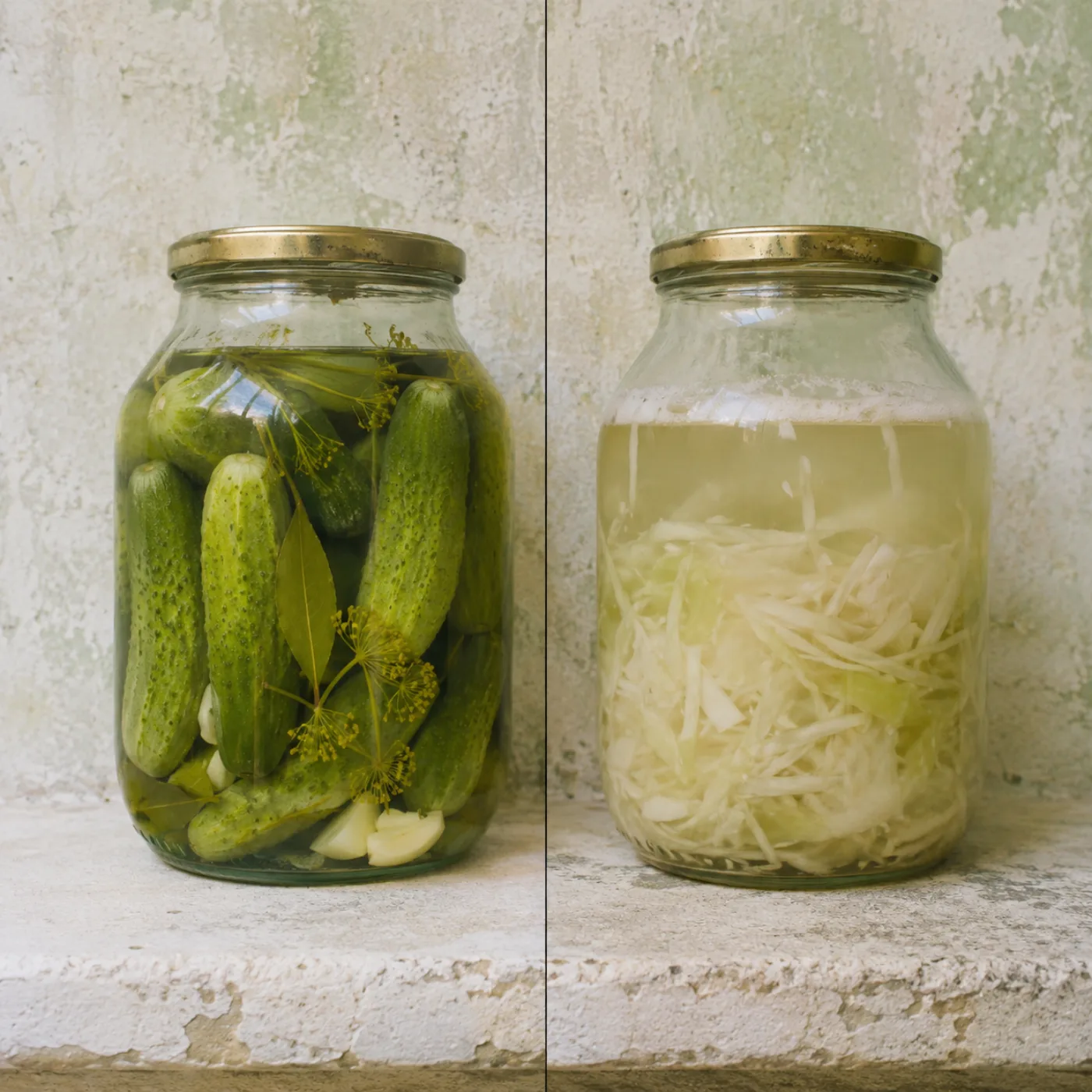
Mould or kahm yeast?
Fermenting Troubleshooting Guide
$7
Buy nowRead the signs
12 min
05 / Store
Store
What it does
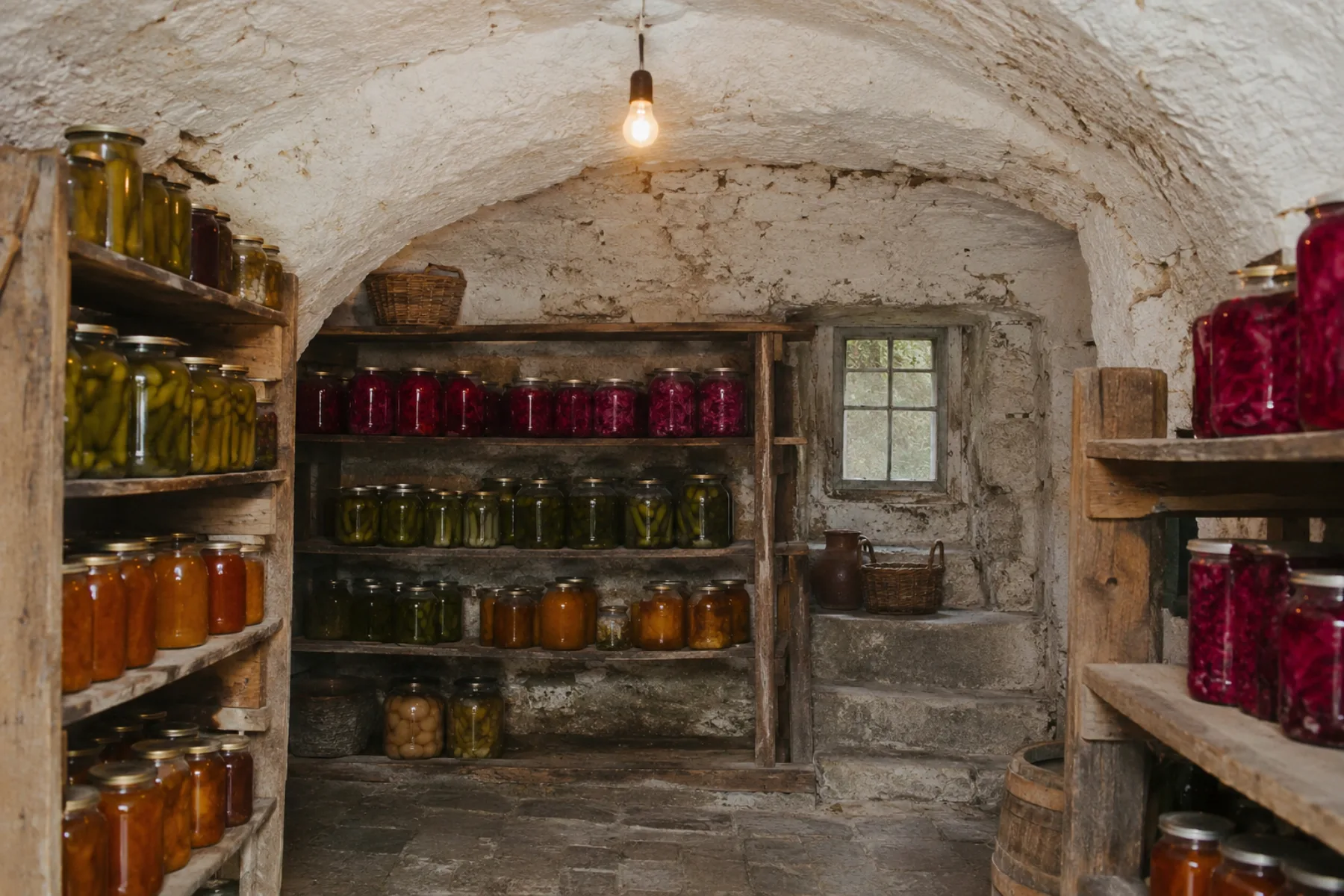
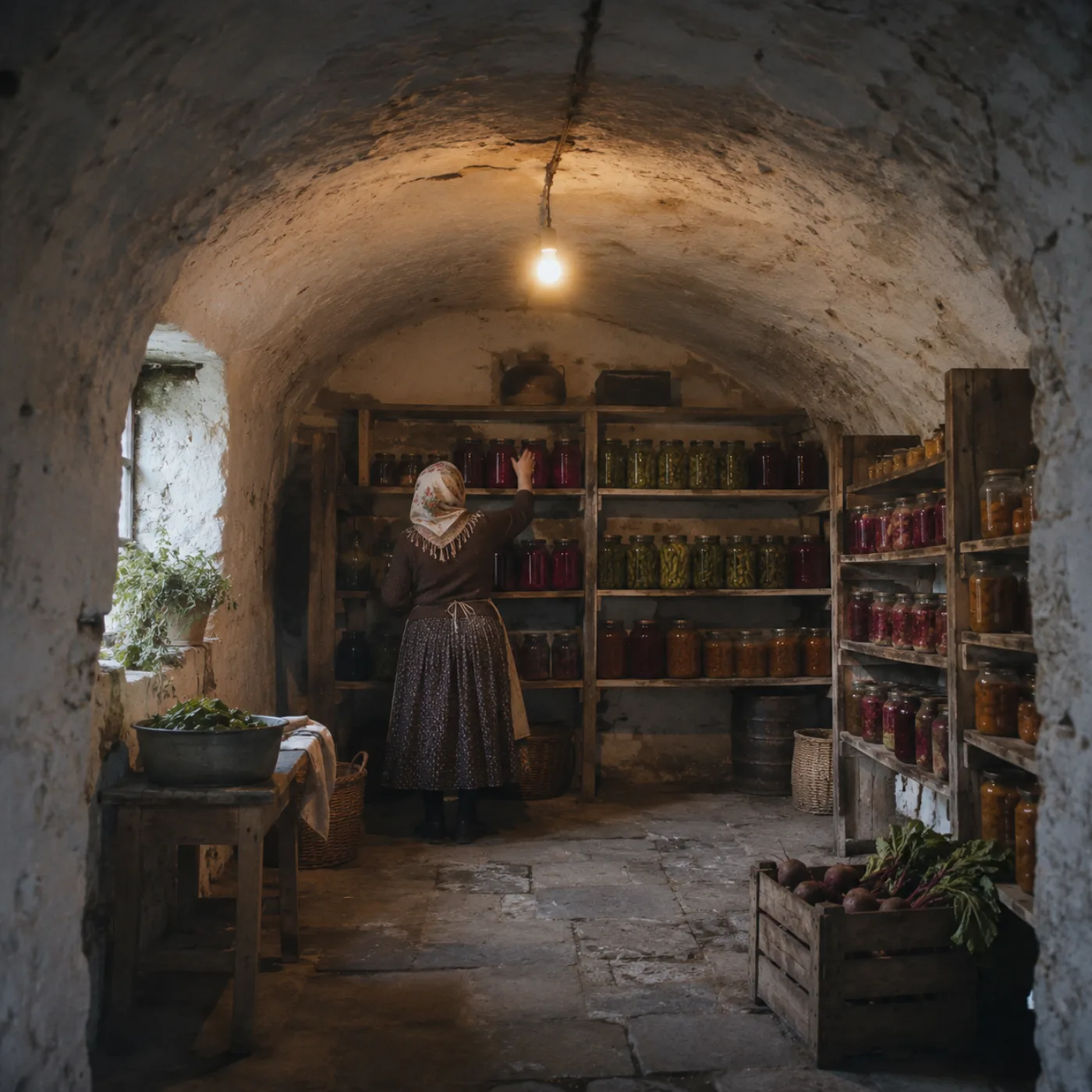
Move the finished jar to the cellar or the fridge, where it slows down and keeps for months.
The one thing that goes wrong
The jar stays in a warm kitchen and turns soft.
- Video
Storing jars through the winter
Cellar and Fridge Storage Guide
$6
Buy nowStore through winter
11 min
Take it further
A guide to keep at hand, and a course to follow one lesson at a time.
YouTube
Latest videos
A new video every Tuesday: cabbage, cucumbers, kvass and what to do when a jar looks wrong.
Recipe
Sauerkraut in one big jar
- Prep
- 30 min
- Serves
- Fills one 3-litre jar
Ingredients
For the jar
- 2 kg white cabbage, outer leaves removed
- 40 g fine sea salt, which is 2 per cent of the cabbage
- 150 g carrot, coarsely grated
- 1 tbsp caraway seeds
- 3 bay leaves
- 6 black peppercorns
Method
- Keep one clean outer leaf aside. Quarter the cabbage, cut out the core and shred the rest as finely as you can.
- Put the shredded cabbage in a large bowl and weigh it. For 2 kg you need 40 g of salt, so adjust the salt if your cabbage weighs more or less.
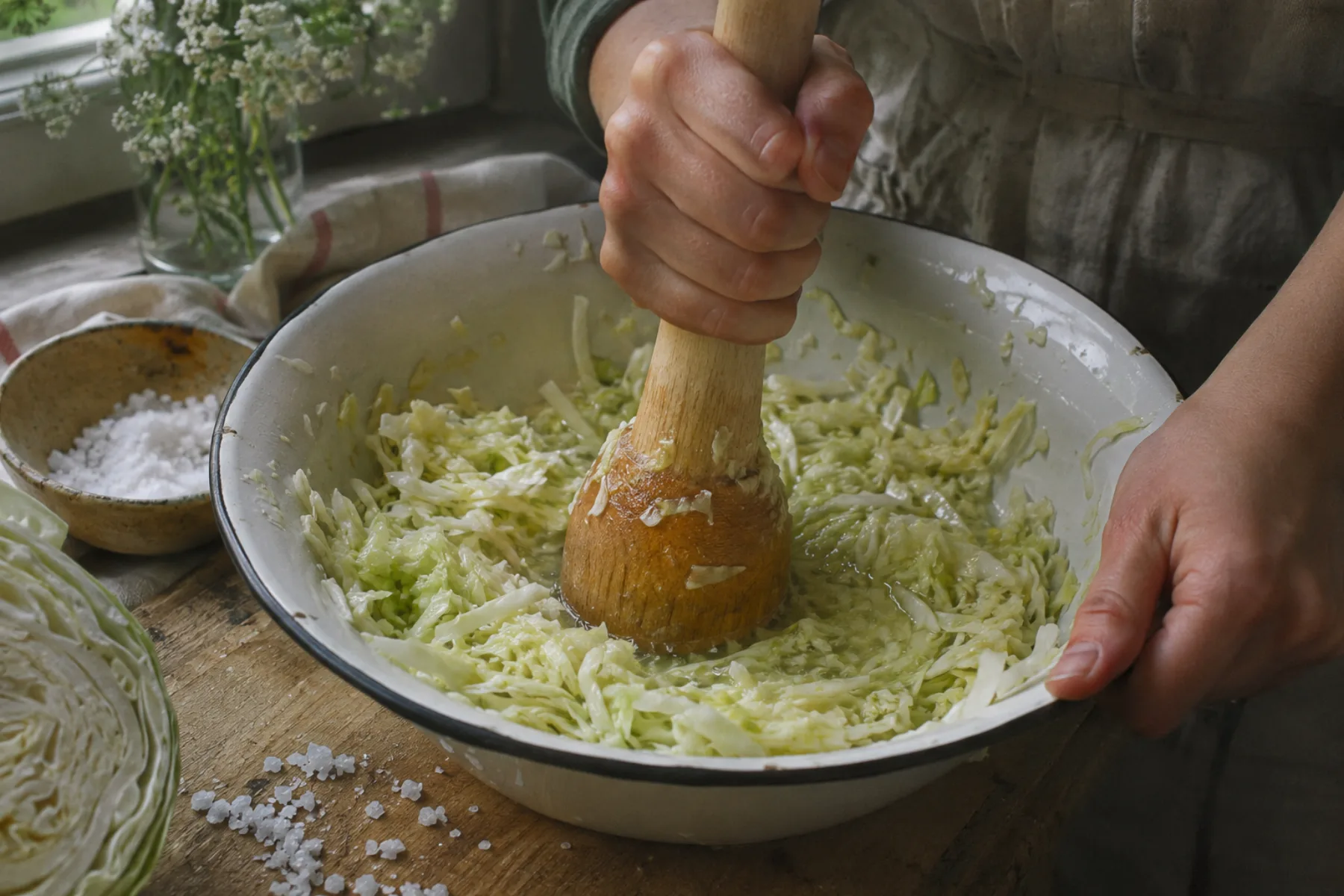
- Sprinkle over the salt and squeeze and press the cabbage with clean hands, or a wooden masher, for about 10 minutes, until it is wet and a pool of brine forms.
- Mix in the carrot, caraway, bay leaves and peppercorns.
- Pack the cabbage into a clean 3-litre jar a handful at a time, pressing hard after each so the brine rises. Leave 4 cm of space at the top.
- Fold the spare leaf over the cabbage and press a glass weight on top, so everything sits under the brine. Cover the jar with a cloth and tie it on.
- Leave the jar at 18 to 20°C, out of the sun, for 7 to 14 days. Press the cabbage down once a day and let the gas out. Taste from day 7.
- When it is sour enough, put on a lid and keep the jar in the fridge or a cool cellar. It keeps for several months.
About me
I’m Orysia, and I ferment vegetables in a flat in Lviv. My grandmother kept a cabbage barrel in her cellar every winter, and I learned from watching her, then from many jars of my own.
I film a new video every Tuesday, write the recipes down in grams and days, and sell booklets, guides and two video courses.
Newsletter
Brine Notes
A short letter every Friday: one thing in my jars this week, one mistake and one thing to try at the weekend.
Merch
My designs, printed to order and shipped by Printful.